


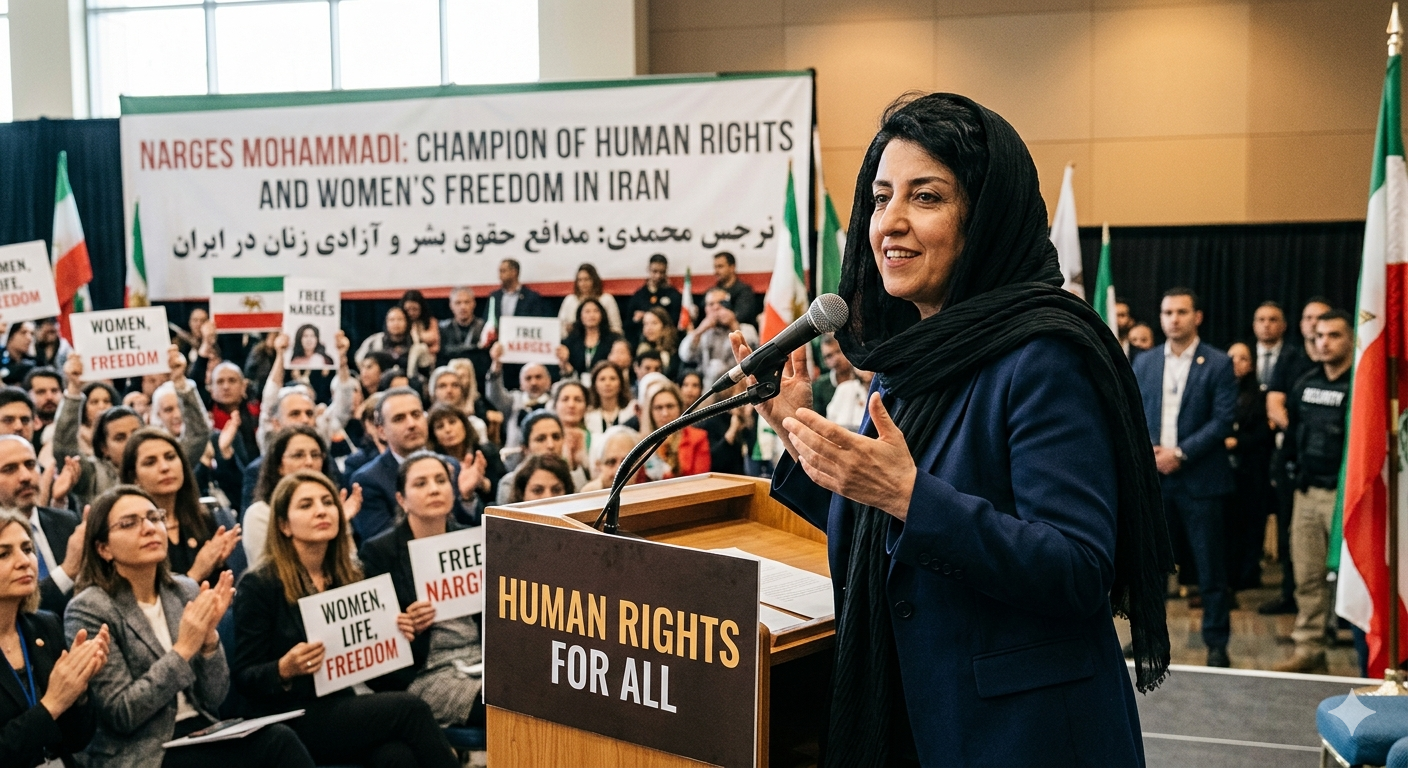
Narges Mohammadi is a name synonymous with courage, resilience, and unwavering commitment to human rights. As an Iranian activist, journalist, and advocate for women’s freedom, she has dedicated her life to challenging oppression, fighting for justice, and amplifying the voices of the marginalized. Despite facing repeated imprisonment and threats to her life, Mohammadi has remained steadfast, becoming a symbol of hope and resistance not only in Iran but around the world.
Early Life and Background
Born in Zanjan, Iran, in 1972, Narges Mohammadi grew up in a society marked by political tension and social restrictions. Her family experienced firsthand the harsh realities of political oppression, which profoundly influenced her perspective from a young age. Her upbringing instilled a strong sense of justice, empathy, and determination to advocate for human rights. Mohammadi pursued a degree in physics, showing early dedication to education and intellectual growth. Even during her school years, she was interested in social issues, often engaging in discussions about fairness, freedom, and equality.
Journey into Activism
Narges Mohammadi’s activism began with her work as a journalist and reformist writer. She reported on social issues, political reform, and women’s rights, becoming an important voice for change. Her writing and involvement in civic organizations gradually connected her with the broader human rights community in Iran. Mohammadi joined the Defenders of Human Rights Center (DHRC), where she played a key role advocating for political prisoners, freedom of expression, and legal reforms.
Her dedication quickly drew the attention of the Iranian authorities. Despite the personal risks, Mohammadi continued to organize campaigns, attend protests, and publish writings that exposed injustices. She focused particularly on two major issues: the oppression of women under discriminatory laws and the unjust application of the death penalty in Iran.
Fight for Women’s Rights
One of Narges Mohammadi’s central causes has been women’s rights. She has openly opposed mandatory dress codes and the restrictions placed on women in Iranian society. Mohammadi believes that gender equality is fundamental to a just society and has consistently advocated for women’s freedom of choice, equal opportunities, and the right to participate fully in social, political, and economic life.
Her work extends beyond advocacy; she has actively supported women imprisoned for speaking out against oppression. By highlighting their stories, Mohammadi has ensured that the struggles of women in Iran gain international attention.
Opposition to Capital Punishment
In addition to advocating for women, Mohammadi has been a leading voice against the death penalty in Iran. She has documented cases of wrongful executions, unfair trials, and inhumane treatment of prisoners. By raising awareness about these injustices, she has worked to influence both public opinion and policy, calling for the protection of human dignity and the abolition of arbitrary punishments.
Imprisonment and Personal Sacrifices
Narges Mohammadi’s unwavering activism has come at a tremendous personal cost. She has been arrested multiple times, often facing harsh sentences on charges related to her human rights work. Her imprisonment has included solitary confinement, limited access to medical care, and mistreatment, conditions designed to intimidate and silence her. Despite these hardships, Mohammadi has remained steadfast, using her time in prison to continue advocating for justice and supporting fellow prisoners.
Her courage in the face of adversity has earned her recognition both inside Iran and internationally. She has become a symbol of resistance for many activists who continue to fight for freedom under oppressive regimes.
Global Recognition and the Nobel Prize
The world has taken notice of Narges Mohammadi’s extraordinary dedication. In 2023, she was awarded the Nobel Peace Prize for her tireless work defending human rights and promoting freedom for women in Iran. This prestigious recognition highlighted her unwavering courage and the impact of her advocacy, drawing global attention to the plight of political prisoners in her country.
Even while in prison, her influence has grown. Her story has inspired other activists, mobilized international support, and shed light on the broader human rights crisis in Iran.
Health Challenges and Continued Advocacy
Years of imprisonment and mistreatment have taken a toll on Mohammadi’s health. She has faced serious medical issues, including heart problems and other complications, yet she continues to speak out through letters, interviews, and writings smuggled from prison. Her perseverance in advocating for justice, despite personal suffering, demonstrates the depth of her commitment to human rights and social change.
Legacy and Impact
Narges Mohammadi’s legacy is one of courage, hope, and relentless pursuit of justice. She has inspired countless individuals within Iran and around the world to stand up for human rights, challenge oppression, and fight for equality. Her advocacy emphasizes that change is possible even in the most challenging circumstances and underscores the power of courage in the face of adversity.
Through her work, Mohammadi has highlighted the struggles of women, political prisoners, and marginalized communities, giving a voice to those who are often silenced. She remains a vital figure in global human rights activism, embodying the principles of freedom, justice, and equality.
Conclusion
Narges Mohammadi is more than an activist; she is a symbol of resilience and hope. Her lifelong commitment to defending human rights and women’s freedom, often at great personal risk, serves as an inspiration for people everywhere. Despite imprisonment, health challenges, and ongoing repression, she continues to fight for a fairer and more just society. Narges Mohammadi’s story reminds the world of the enduring power of courage, conviction, and the human spirit.
